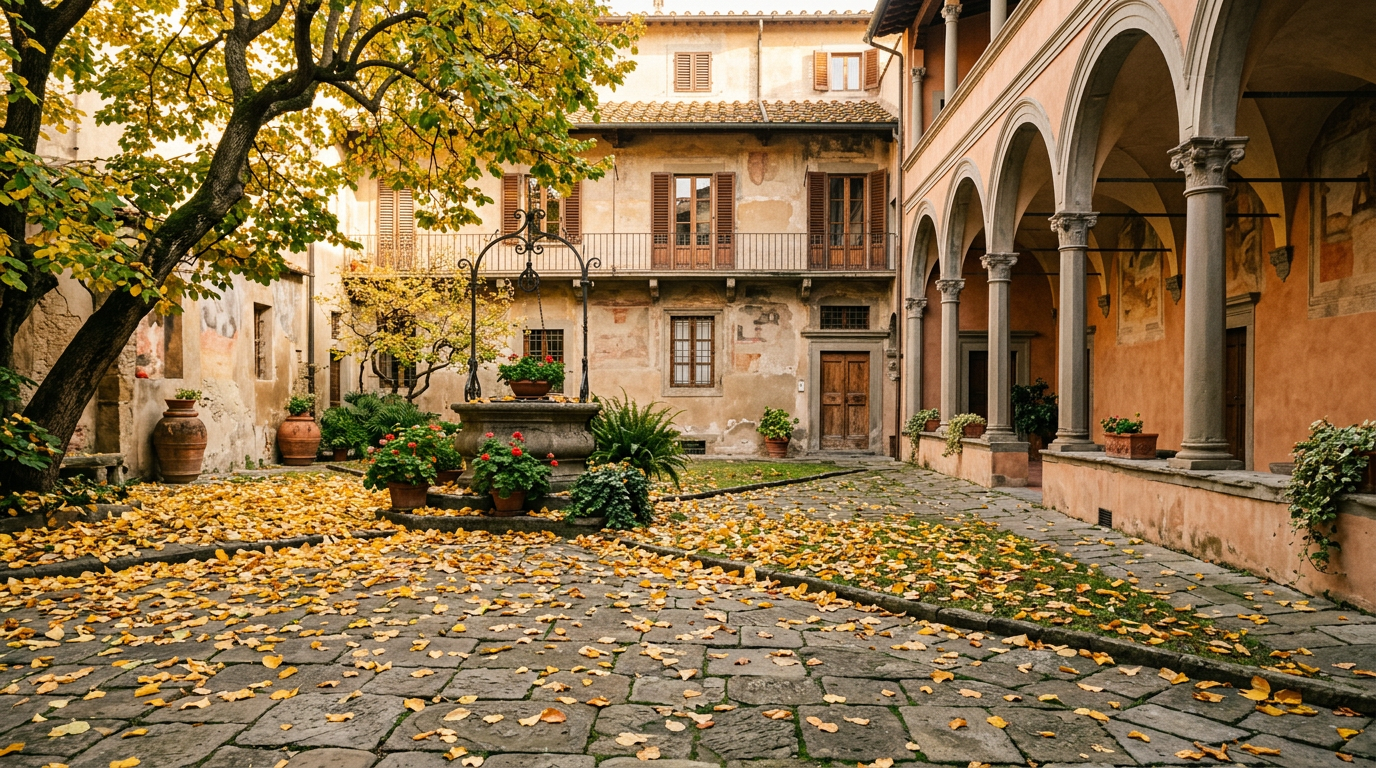
Why Florence September October Is Worth Planning For
Florence September October offers ideal temperatures, harvest-season countryside, autumn colour on the hills, and a city that has exhaled after summer.
Experienced travellers to Florence often name September and October as their preferred time of year. The city is not empty, but it is measurably calmer than July and August. The temperatures are comfortable for walking. The food changes in ways that reflect the season. And the quality of light in October, lower and warmer than any summer month, changes how the city looks entirely.
If you have visited Florence in peak summer and returned in autumn, the difference is significant enough to feel like a different city.
The Conditions in September
September begins warm. Daytime temperatures in the first two weeks average 25-28 degrees, dropping gradually to around 20-22 degrees by month’s end. Nights cool to 14-16 degrees. Rain becomes more frequent as the month progresses, but September rainfall is usually brief and does not dominate the day.
Tourist numbers thin out from mid-September as European school holidays end. The shift is noticeable in the piazzas. Piazza della Signoria and Piazza del Duomo, often gridlocked with tour groups in July, become spaces where you can actually stand still and look around. You still need to book the Uffizi and Accademia in advance, but the gap between booking and walk-in entry is much smaller than in summer.
Many local restaurants and shops that closed in August reopen in September. The city is more fully operational in September than at any point during the summer. This matters particularly for neighbourhood trattorias and smaller food shops: the ones that are actually worth going to.
The wine harvest, called vendemmia, begins in late September across the Chianti wine region, starting around 30 km south of Florence. If you have a car or are prepared to join an organised tour, the vineyards at this time are working landscapes rather than tourist destinations. Several estates welcome visitors during the harvest and offer tastings alongside the production activity. It is a different experience from a standard winery visit.
September Evenings Still Have Summer Character
Sunset at the beginning of September is around 20:00. The outdoor restaurant culture continues through the month, and September evenings are genuinely comfortable: warm but not oppressive. Terrace tables are still in use, the streets around Piazza Santo Spirito are busy in the Oltrarno, and the Lungarno embankments are pleasant for an after-dinner walk.
September is arguably the best month to experience the combination of Florence’s summer social life and its autumn cultural calendar simultaneously.
October: Colour, Events, and the Countryside
October is the month when Florence’s surroundings come into their own. The Chianti hills and the Fiesole ridge, visible from Piazzale Michelangelo and San Miniato al Monte, develop warm amber and red tones from mid-October. The plane trees along the Lungarno embankments and in the Parco delle Cascine change colour too, though the city itself does not transform as dramatically as the surrounding countryside.
Taste of Florence (usually mid-October, dates vary by year) is a food and wine event featuring Florentine and Tuscan producers across various city venues. It offers a direct route into the seasonal food culture without travelling outside the city.
Florence Biennale (held in even-numbered years in October, next in 2026) is the city’s major contemporary art fair, based at the Fortezza da Basso (Viale Filippo Strozzi 1). The programme is published on florencebiennale.org and covers international contemporary art across a range of media.
Fierucola dell’Uva is a small organic market traditionally held near the Forte di Belvedere on one Sunday in October. Local farmers sell grapes, seasonal produce, preserves, and wine. Check the Comune di Firenze website for the specific date in the current year.
The last days of October mark the run-up to the Tutti Santi long weekend (All Saints Day, 1 November). Florence sees a moderate increase in domestic Italian visitors over this period. If your visit falls around this time, book accommodation and restaurants ahead.
Things You Cannot Do Comfortably in Summer
October allows outdoor activities that are genuinely unpleasant in July.
Sitting at an outdoor restaurant table at 13:00 is comfortable in October. The same table in July would be unpleasant by 11:30. Lunch as a leisurely outdoor activity only works in autumn.
The walking routes south of the Arno change completely. The climb from Ponte Vecchio to San Miniato al Monte is a sweaty 30-minute effort in summer. In October it is a comfortable walk through gardens that are changing colour, with clear views across to the city below.
Visiting Tuscan hill towns without crowds. Siena, San Gimignano, and Volterra are all calmer in October than at any summer point. The streets have space, the queues are short, and the towns feel like places rather than attractions.
Olive farm visits in October: the harvest season for Tuscan olive oil begins in October. Day trips to farms in the Chianti or Valdarno areas, most offering oil tasting and visits to the press, are organised through local tour operators. Freshly pressed Tuscan olive oil in November is one of the most specific flavours in Italian food culture.
What to Pack for September and October
September requires roughly the same clothing as late spring: light layers for the day, a light jacket or cardigan for the evening. The temperature swing across the day is larger than in summer.
Early October: daytime temperatures reach 18-22 degrees. A medium-weight layer for mornings and evenings is enough.
Late October: mornings can drop to 8-10 degrees. A proper coat and scarf become necessary. Rain increases; a packable waterproof layer is worth carrying.
Footwear matters in October. The historic centre’s cobblestones become slippery when wet, polished by centuries of foot traffic. Shoes with grip and waterproofing are more practical than anything stylish but flat-soled.
Where to Stay in Florence
September and October are among the best months to use central Florence as a base for day trips into the surrounding region. The wine harvest in September, the truffle markets in late October, and the olive oil production in November all give you reasons to move outward from the city. The Key is at Via Cittadella 22, a 5-minute walk from Santa Maria Novella station, which connects directly to trains for Siena, Pisa, and Arezzo, as well as regional buses south into the Chianti. Full details at The Key.