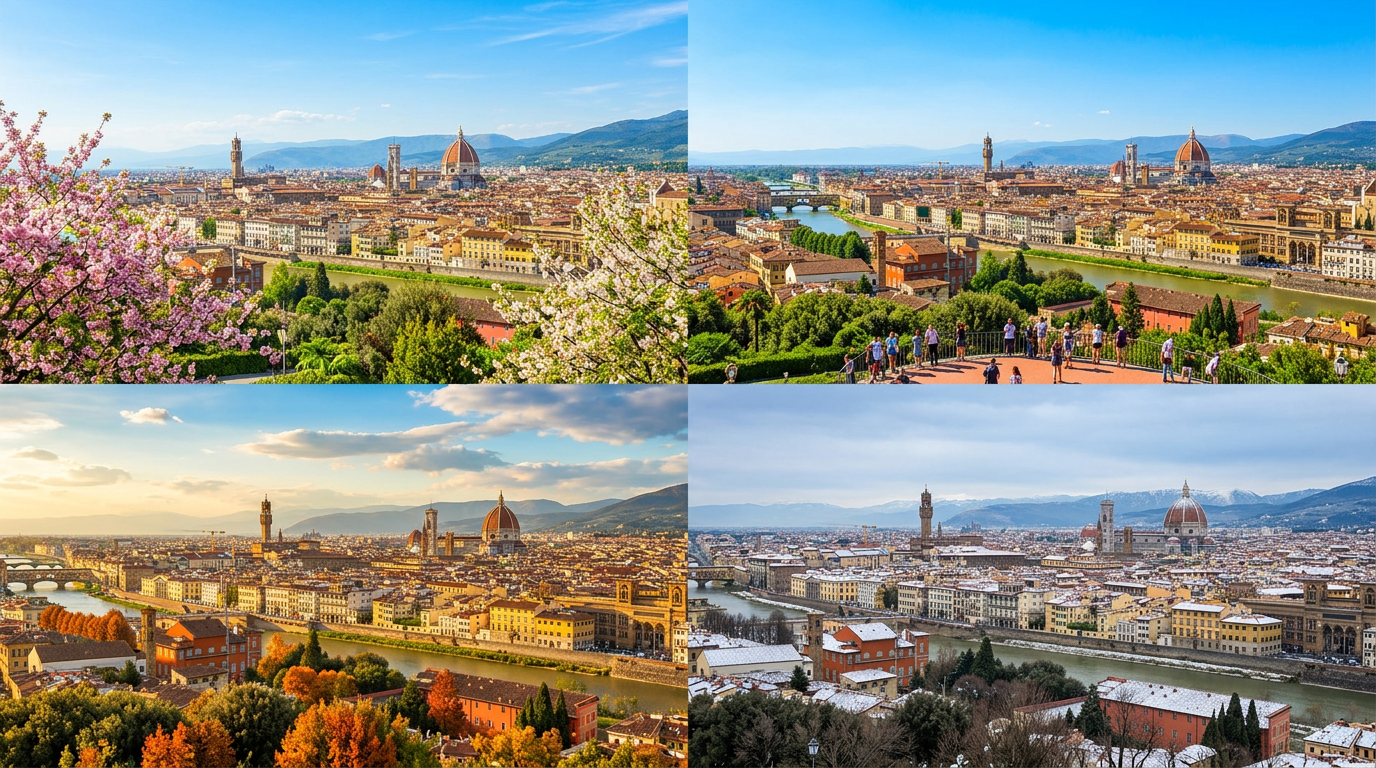
Florence Weather Month by Month: When Is the Best Time to Visit
Honest data on Florence weather and the best time to visit, with monthly temperatures, rainfall, crowd levels, and clear recommendations for each type of.
Florence climate: the basic picture
Florence sits in the Arno valley, enclosed by hills on three sides. This geography shapes the climate in specific ways. The hills block Atlantic air masses and trap heat in summer. The valley fills with cold air in winter. The result is a climate with more extremes than the latitude would suggest: genuinely cold winters and reliably hot summers, with the most pleasant conditions falling in the shoulder seasons.
Mean temperatures span from a January average of 2 to 10 degrees Celsius to a July average of 18 to 34 degrees. That 24-degree gap means the city feels like a different place depending on the month you visit. Choosing the right window involves weighing weather against crowd levels and accommodation prices, which move in opposite directions: when the weather is best, the city is busiest and most expensive.
The following is a month-by-month breakdown with the information you need to make that trade-off honestly.
Monthly conditions across the year
January sits at the cold end of the spectrum. Average temperatures range from 2 degrees at night to 10 degrees during the day. Rain is possible. Fog sometimes settles in the Arno valley for days at a time. On the other side of the ledger: the city is very quiet, accommodation is at its cheapest except for the Christmas-New Year period, and the museums are accessible without forward booking.
February is similar to January in temperature, averaging 3 to 12 degrees. Days lengthen noticeably through the month. Carnival (Carnevale) falls in February and brings some local activity, though Florence’s version is modest compared to Venice.
March brings the first signs of spring. Temperatures move toward 6 to 16 degrees. The light noticeably improves. Crowds are still low relative to the summer peak. Weather is unpredictable: a warm week at 20 degrees can follow a cold grey spell. Layers are essential.
April is full spring. Average temperatures of 9 to 20 degrees make walking comfortable. The gardens begin to flower. Easter falls in April in most years and brings a significant, though manageable, increase in visitors. Outside the Easter weekend, mid to late April is an excellent time to visit.
May averages 12 to 24 degrees during the day. Warm enough for outdoor dining and long evening walks, cool enough that extended walking is not tiring. Tourist numbers are rising but the summer peak has not arrived. One of the strongest months of the year overall.
June averages 16 to 30 degrees. Early summer means long days, warm afternoons, and the beginning of the high season. The San Giovanni festivities on 24 June and the Calcio Storico Fiorentino matches in the weeks before are genuine local events worth catching. Museums are fully booked and require advance reservation.
July averages 18 to 34 degrees, with regular spikes above 35 degrees in the afternoon. Peak heat and peak crowds arrive together. Outdoor sightseeing between noon and 17:00 is genuinely uncomfortable. Museum queues are at their longest of the year.
August matches July for heat and adds the complication of Ferragosto on 15 August. Many local businesses close for one to two weeks. The city is simultaneously full of tourists and emptied of its residents, which produces an odd quality.
September is one of the most consistently recommended months. Temperatures ease toward 14 to 28 degrees. After mid-September, crowds drop noticeably from the summer high. The evenings are warm and comfortable. The Tuscan harvest season brings excellent food and wine to restaurant tables.
October averages 10 to 20 degrees. Autumn colour begins in the surrounding hills. The first three weeks are reliably good: comfortable for walking, lower crowds, better restaurant availability. Rain risk increases from mid-October onward.
November is quiet, cool, and sometimes rainy. Average temperatures of 6 to 14 degrees. Museums are at their most accessible of the year. The city feels like itself rather than a version staged for visitors.
December averages 4 to 12 degrees. Christmas lights appear along the main shopping streets from 8 December. The Weihnachtsmarkt German Christmas market at Piazza Santa Croce runs until 24 December. The period between Christmas and 6 January brings a return of significant crowds and elevated prices.
The clearest recommendations
For a first visit, these windows offer the best overall balance of conditions.
Late April to mid-May is warm, green, and relatively uncrowded outside the Easter peak. Long days give you more usable hours. The main gardens are in full spring colour. The downside is that popularity is increasing as the tourist season builds.
Second half of September is the favourite period for many repeat visitors. The summer heat has eased. Crowds have dropped from their August-September peak. The days are still long. Tuscan autumn food is at its best. This is a particularly strong choice if you enjoy food and outdoor dining.
First three weeks of October offer autumn light and comfortable walking temperatures with noticeably fewer visitors than summer or shoulder spring. Rain risk is the main variable. A forecast check before you travel is worthwhile.
The periods that need extra planning
July and August are not impossible but they require specific strategies. Book every museum in advance (2 weeks minimum for the Uffizi and Accademia). Plan outdoor sightseeing for early morning and late afternoon. Carry water constantly. Accommodation prices are at their highest. If you have any flexibility, avoid this window for a first Florence visit.
Christmas and New Year (20 December to 6 January) means elevated prices, busy museums, and the need to book everything well ahead. The atmosphere is genuine and the lights are pretty. But it is not a cheap or easy time to be in the city.
November is actively underrated. The crowds and prices make a strong case for it if your main interest is museums and food rather than outdoor activities.
Temperature and rainfall summary
| Month | Min (C) | Max (C) | Rain days |
|---|---|---|---|
| January | 2 | 10 | 8 |
| February | 3 | 12 | 8 |
| March | 6 | 16 | 9 |
| April | 9 | 20 | 10 |
| May | 12 | 24 | 9 |
| June | 16 | 30 | 6 |
| July | 18 | 34 | 4 |
| August | 18 | 34 | 5 |
| September | 14 | 28 | 7 |
| October | 10 | 20 | 10 |
| November | 6 | 14 | 11 |
| December | 4 | 12 | 9 |
These are long-term averages. Individual years vary. The useful takeaway is that May through October gives reliable warm temperatures for outdoor activities, while November through March offers the best museum access and prices at the cost of some weather reliability.
Where to Stay in Florence
Whatever time of year you visit, a central location within walking distance of the main sites saves time and reduces planning complexity. The Key is at Via Cittadella 22, 5 minutes on foot from Santa Maria Novella station, positioned at the centre of Florence for any season.
Full details at The Key.