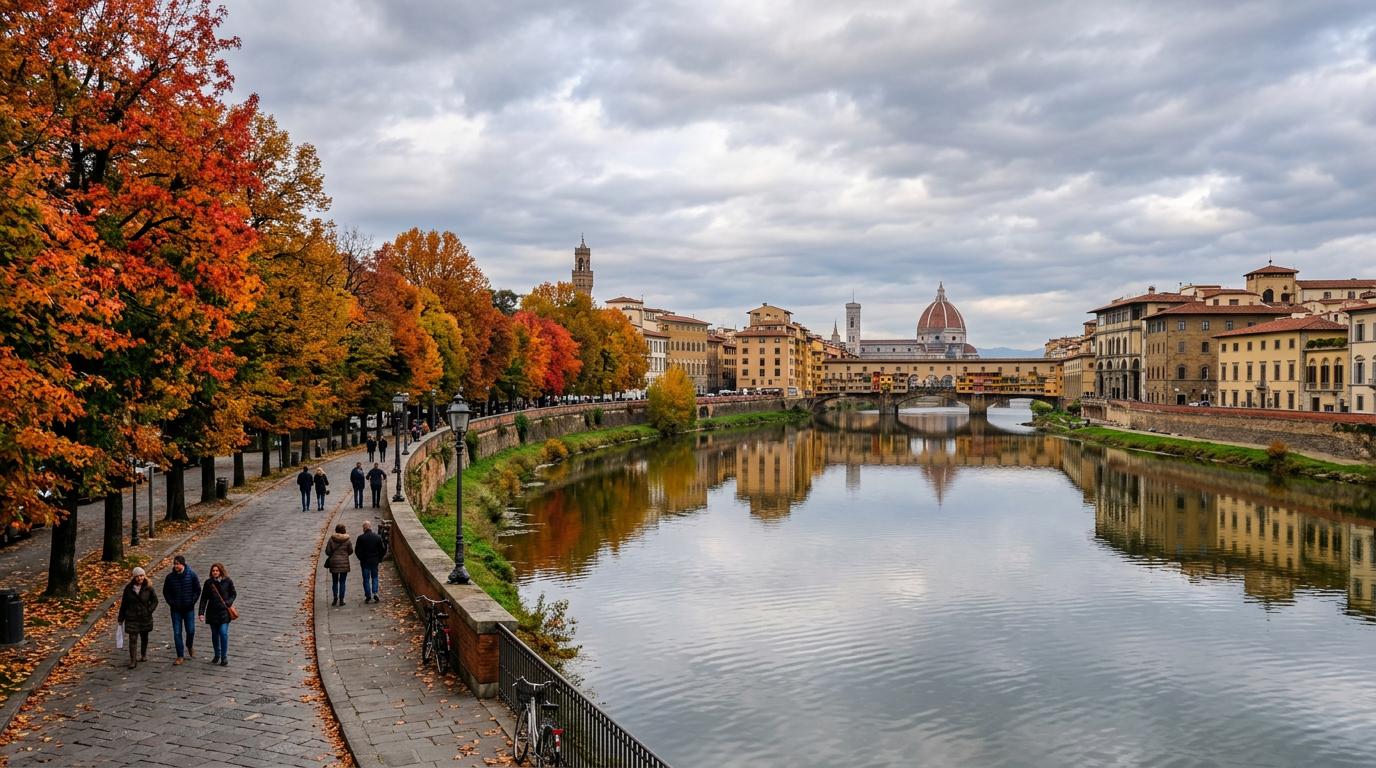
The Insider's Guide to Florence Autumn
Florence autumn what to do: seasonal markets, truffle fairs, foliage walks, exhibition openings and the food that only appears in October and November.
Florence in autumn covers a wide range. Late September still has warmth, outdoor restaurant terraces, and long evenings. October brings comfortable temperatures, the wine and olive harvests in the surrounding region, and a city population that has returned from the summer exodus. November turns cold and rainy, with the museums to yourself and the seasonal menus at their most specific.
October is the standout month within this range. Everything that makes Florence worth visiting is accessible in October without the compromises required in summer.
Why Autumn Changes the Museum Experience
The most tangible difference between summer and autumn in Florence is access. From mid-September, the queues at even the most popular museums shorten. By October, smaller institutions such as the Bargello, the Museo di San Marco, and the Museo dell’Opera del Duomo can often be entered without any advance booking at all.
The Uffizi and Accademia still benefit from forward planning, but the urgency is different. A summer visitor needs to book weeks ahead; an October visitor can often find good slots three to four days before. This matters for flexible travellers who make decisions as they go.
Restaurants reflect the same shift. The best trattorias in the Oltrarno and around Piazza Santa Croce, which require booking weeks in advance for a summer Saturday, are usually reachable with one to two days’ notice in October. The city is more navigable at every level.
Seasonal Markets and Fairs
Fierucola is a monthly organic market held in Piazza della Santissima Annunziata on the third Sunday of each month. The October and November editions are the most interesting: stalls focus on autumn produce including squash, honey, preserves, and the first new olive oil of the season. Entry is free.
Mostra Mercato Internazionale dell’Artigianato (International Crafts Fair): Held at the Fortezza da Basso (Viale Filippo Strozzi 1) in late October or early November, this is one of the largest crafts fairs in Europe. Artisans from dozens of countries present work in woodworking, ceramics, jewellery, and textiles. Entry prices and specific dates for the current year are available at mostraartigianato.it.
Truffle markets in the surrounding area: The city of San Miniato, 45 km west of Florence, holds a white truffle market on three Sundays in November each year (dates vary). San Miniato is reachable by train from Santa Maria Novella station in approximately 45 minutes (change at Empoli), followed by a short taxi or bus ride from San Miniato Basso station. The white truffle from San Miniato is regarded as some of the finest in Italy and the market is worth making the trip for.
Expo Chianti Classico in Greve in Chianti: This wine fair in the town of Greve (30 km south of Florence) typically runs in September. It showcases wines from the Chianti Classico DOCG appellation from producers across the region. SITA buses run from Florence to Greve in approximately one hour.
Where the Autumn Colour Actually Is
Florence itself is not a city that transforms dramatically in autumn. The historic centre has limited street trees and the urban landscape stays relatively consistent. The colour is in the surrounding territory.
Fiesole (8 km north, bus line 7 from the centre, 30 minutes): The wooded slopes above Fiesole develop warm colour from mid-October. The walk down from Fiesole to Florence via Via Vecchia Fiesolana, through terraced olive groves and chestnut woods, takes about 45 minutes and is one of the best autumn walks in the area.
Boboli Gardens (Piazza de’ Pitti 1, entry 10 euros): The garden’s plane trees turn gold from mid-October. In the early morning, with mist rising from the Arno valley below, the Boboli in autumn is genuinely atmospheric.
Parco delle Cascine (west along the Arno, free): Florence’s main public park changes colour in October and November. The Tuesday morning market here, larger and more local than any market in the tourist centre, is less crowded in autumn than in any summer month.
Monte Senario (30 km north, accessible by car): A hilltop monastery surrounded by chestnut and beech forest. The forests are a traditional foraging area for chestnuts in October. The drive north from Florence through the Mugello valley offers consistently good autumn scenery.
Exhibition Season in the Major Venues
Florence’s major museums and galleries concentrate their most ambitious temporary exhibitions in autumn, scheduling from September through December to capture the peak visitor period before winter.
Palazzo Strozzi (Piazza Strozzi, entry 15 euros for standard exhibitions): Florence’s dedicated temporary exhibition venue, housed in a Renaissance palace in the historic centre. The autumn programme is announced in July each year. Check palazzostrozzi.org for the current season’s schedule.
Museo Novecento (Piazza Santa Maria Novella 10, open 11:00-20:00, entry 9.50 euros): The modern and contemporary art museum facing the church of Santa Maria Novella. Autumn typically brings new exhibition openings. The collection includes significant Italian twentieth-century work as a permanent backdrop.
The Corridoio Vasariano, the elevated passageway linking Palazzo Vecchio to Palazzo Pitti via Ponte Vecchio, is accessible on a timed booking through the Uffizi. After restoration work, it reopened to visitors. Book via the Uffizi website and check current availability and pricing.
The Food That Autumn Brings
October and November shift the menu in Florentine restaurants toward a specific set of flavours that are not available in any other season.
Pappardelle al cinghiale: Wide ribbons of fresh pasta served with wild boar ragu. The hunting season runs through autumn, and the ragu served in October and November uses fresh, recently harvested boar rather than frozen. It is the quintessential Tuscan autumn dish and appears on nearly every trattoria menu.
Ribollita: A thick bread and vegetable soup made with cavolo nero (Tuscan black kale), cannellini beans, and day-old bread, slowly cooked until the flavours concentrate. It is a winter staple that begins appearing on menus in October. A well-made ribollita is one of the most satisfying things to eat in Florence.
Bistecca alla Fiorentina: Available year-round, but the cool evenings of autumn make the grilled T-bone from Chianina cattle feel entirely appropriate. Sold by weight at 4-6 euros per 100g, it is Florence’s signature meat dish and best shared between two people.
Olio novello: In November, the first pressing of the olive harvest produces a vivid green, intensely peppery oil quite unlike anything sold in supermarkets. Markets and good food shops stock it in small bottles from mid-November. Tasting it on toasted bread is one of the most specifically seasonal food experiences in Tuscany.
Where to Stay in Florence
Autumn is the ideal season to use Florence as a base for exploring the wider region. The wine harvest in September, the truffle markets in November, and the olive press visits in October all create reasons to travel outward from the city. The Key is at Via Cittadella 22, a 5-minute walk from Santa Maria Novella station, connecting you to regional trains for Pisa, Siena, and Arezzo, and to bus services into the Chianti and the Mugello. Full details at The Key.